What Is A Cleansing Oil And Who Is It For?
It seems as if almost every skincare brand offers a cleansing oil, so it’s natural to wonder how they work and whether they’re right for your skin.
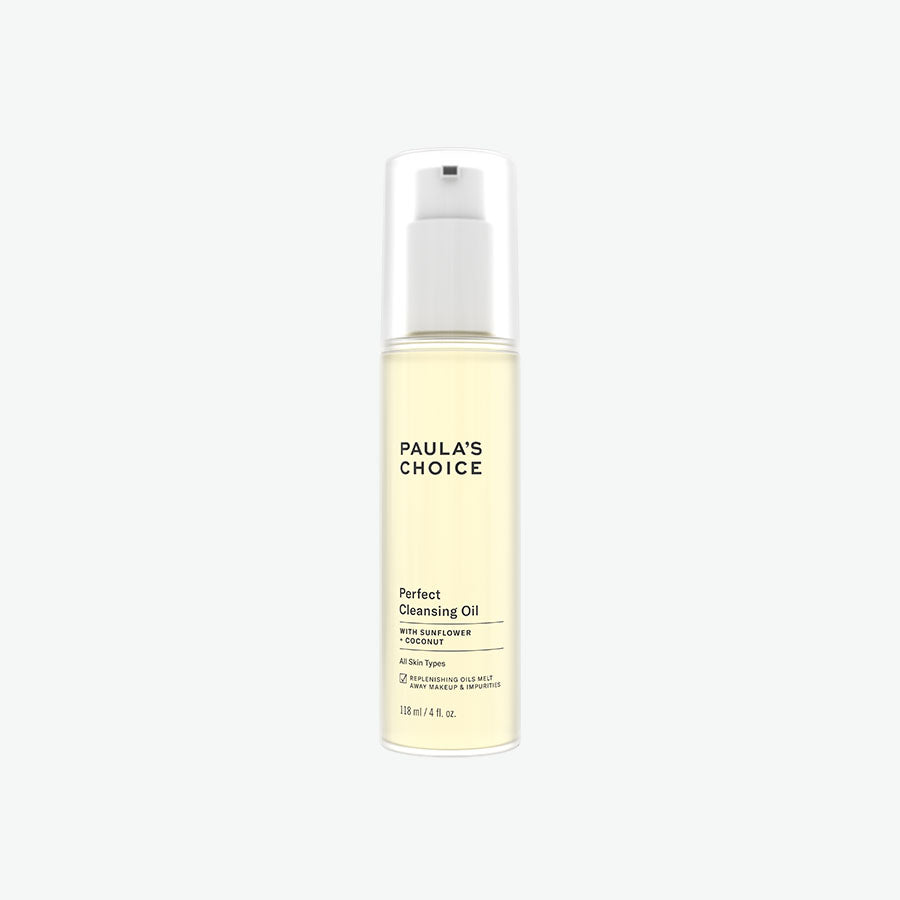
Cleansing oils, especially those formulated to be easy to rinse off like the Perfect Cleansing Oil, can be a wonderful addition to your skincare routine, whether used alone or as part of a double cleanse.
What is a Cleansing Oil?
Cleansing oils are oil-based cleansers that help remove makeup, surface debris, and excess oil from the skin. What makes them different is how they work compared to traditional water-soluble cleansers that have a cream, gel, or foaming texture.
Traditional cleansers cleanse primarily with surfactants, ingredients that interact with oil, makeup, and surface debris on the skin in a manner that allows them to be suspended and then rinsed with water. Well-formulated cleansers also deposit hydrating ingredients on the skin, so it feels smooth and soft rather than tight or dry.
Many cleansing oils also contain surfactants, but the surfactants are not the stars of the show; rather, the oils take centre stage.
How do Oils Cleanse Your Skin?
Oils don’t just moisturize skin, they also act as solvents, meaning they can dissolve similar substances. Oils are a special type of solvent because they’re lipophilic, meaning they’re naturally attracted to other oils, including the sebum our skin produces and the oil-like ingredients in makeup. This is what allows the oils in a cleansing oil to quickly dissolve makeup and excess oil while softening skin at the same time.
Surfactants and a type of ingredient called an emulsifier then come into play, allowing the oils and the substances they have dissolved to mix with water and be easily rinsed away.
Benefits of Cleansing Oil
The main benefits of cleansing oils are:
- Provide quick and easy removal of all types of makeup and sunscreens
- Leave skin feeling supple and smooth
- Compatible with any other type of cleanser if you choose to double cleanse
The best cleansing oils for your skin contain non-fragrant plant oils. These are rich in components known as glycerides, which multitask by removing what you don’t want left on your skin (like makeup and sunscreen) while replenishing what it needs more of, namely skin-softening hydrators.
Who is a Cleansing Oil Best for?
All skin types can use a cleansing oil if it has been formulated to be rinsable with water and not leave an oily residue. Whether or not you should use a cleansing oil in your skincare routine comes down to two things: personal preference and how much long-wearing makeup or water-resistant sunscreen you use. A good cleansing oil can help break down tenacious makeup and sunscreen, thus making light work of a tough job.
Assuming the cleansing oil doesn’t contain problematic ingredients like fragrance (including fragrant essential oils), they’re not a wrong choice for anyone, including those with sensitive, redness-prone, or even blemish-prone skin (when used as a step one of a double cleansing process).
There’s one exception: cleansing oils that are composed of a single oil or oil blend without surfactants or emulsifiers are not recommended for combination to oily or blemish-prone skin, as they only add to skin’s oiliness issues.
How to use Cleansing Oil
To incorporate a cleansing oil into your skincare routine, apply a small amount of the product to wet skin, gently massage over your face and eye area, rinse thoroughly, and pat skin dry with a soft, clean towel. You can also experiment with applying the cleansing oil to dry skin, and then you either rinse with water or splash with water and work the oil into a milky emulsion before rinsing.
If you’re using your cleansing oil as part of a double cleanse, you would then follow up with a regular, water-soluble cleanser like our DEFENSE Hydrating Gel-to-Cream Cleanser. Many people prefer to use cleansing oils this way to ensure completely clean skin.
Learn more about facial cleansers.
Visit our online store to see the selection of facial cleansers we provide.
References for this information
- Journal of Cosmetic Dermatology, January 2020, pages 180–184; and February 2018, pages 8–14
- International Journal of Cosmetic Science, August 2015, pages 371–378; and August 2013, pages 337–345
- Dermatology Research and Practice, August 2012, ePublication
- Journal of the European Academy of Dermatology and Venereology, January 2010, pages 1–6
- Journal of Cosmetic Dermatology, February 2025, pages e16710